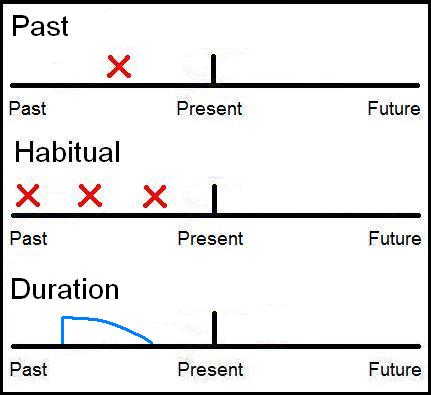
When we want to talk about the past, we mostly use the Past Simple. That's why it's called the
Past Simple. Easy? Yes, it is.
So, why is it called the Past
Simple? Easy again: because it's
form.
This means that in
we simply use the past form of the verb, without an
. There are two ways to make a verb's past form:
a)
Regular verbs: just add
.
b)
Irregular verbs: we have to learn them. The Past is the
column.
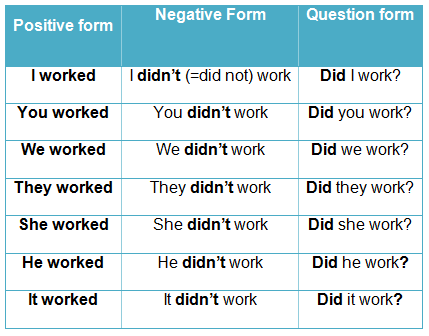
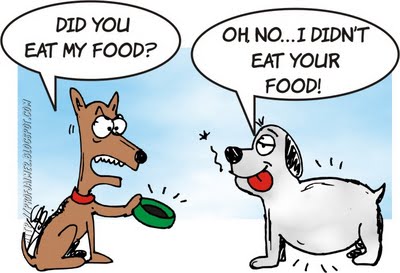
Remember the Present Simple. There, for
and negations you needed the auxiliary verb
DO. It's
in the Past Simple: You need the
Past form of DO -
.
So, this is the way:
She play
ed football.
Did she
play football?
She
didn't play football.
Be careful with the spelling:
a) Final
y becomes
: She stud
ied.
b) Final consonants
short vowels are doubled: They travel
led to York.
c) If the verb ends with an
e, we
add another one: The cat escap
ed.
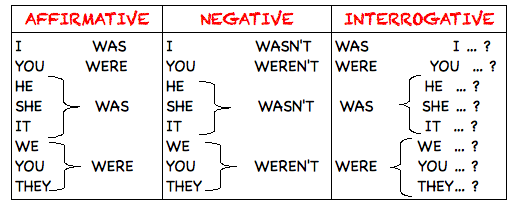
As always, the verb
BE is a bit different: it's got
past forms, and it
need an auxiliary verb. Look at the examples to the left.
So much for now -let's practice.
 button.